
PUNCH4NFDI @ DPG spring meeting
With a lot of FAIR research and female power
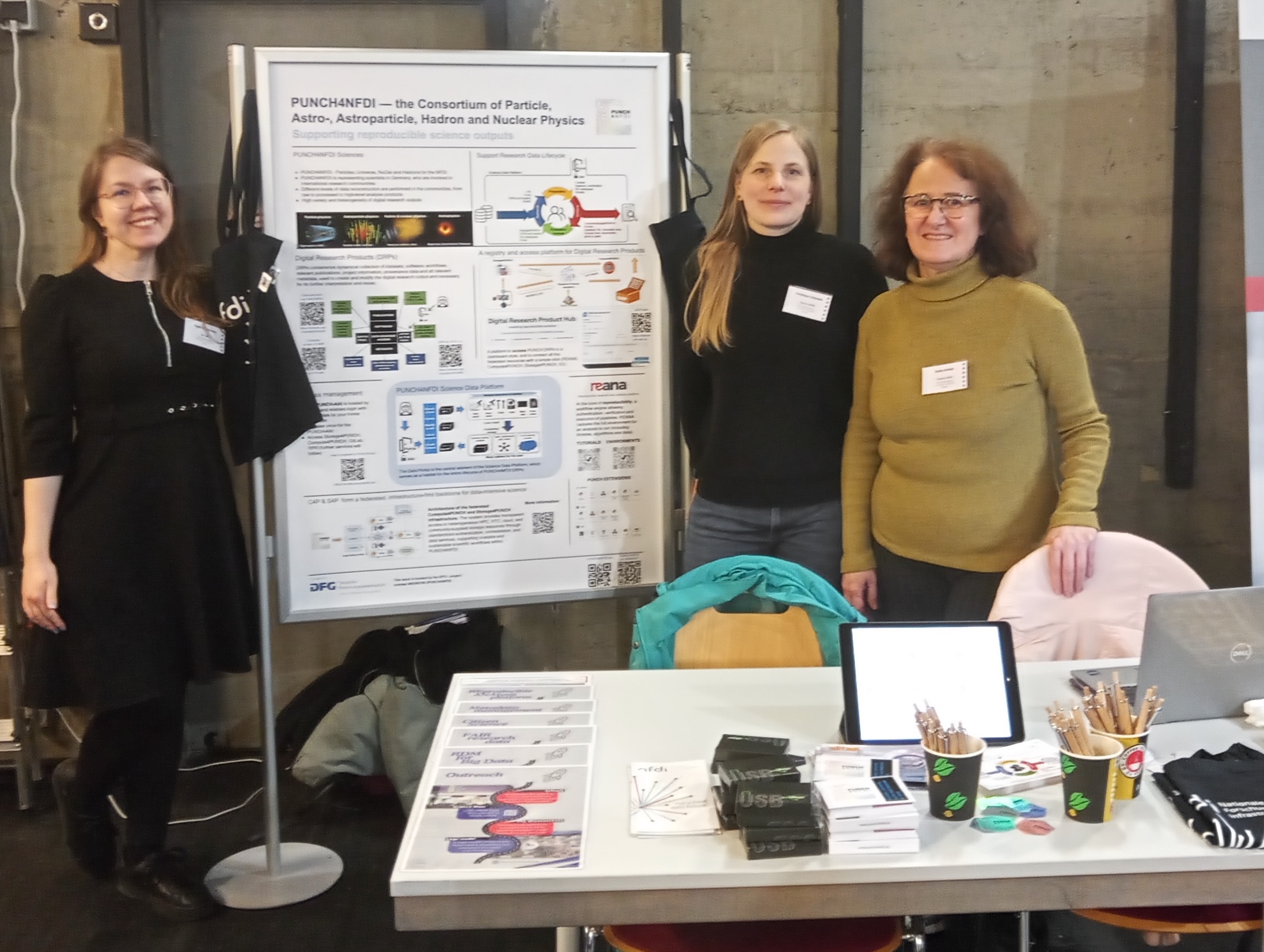
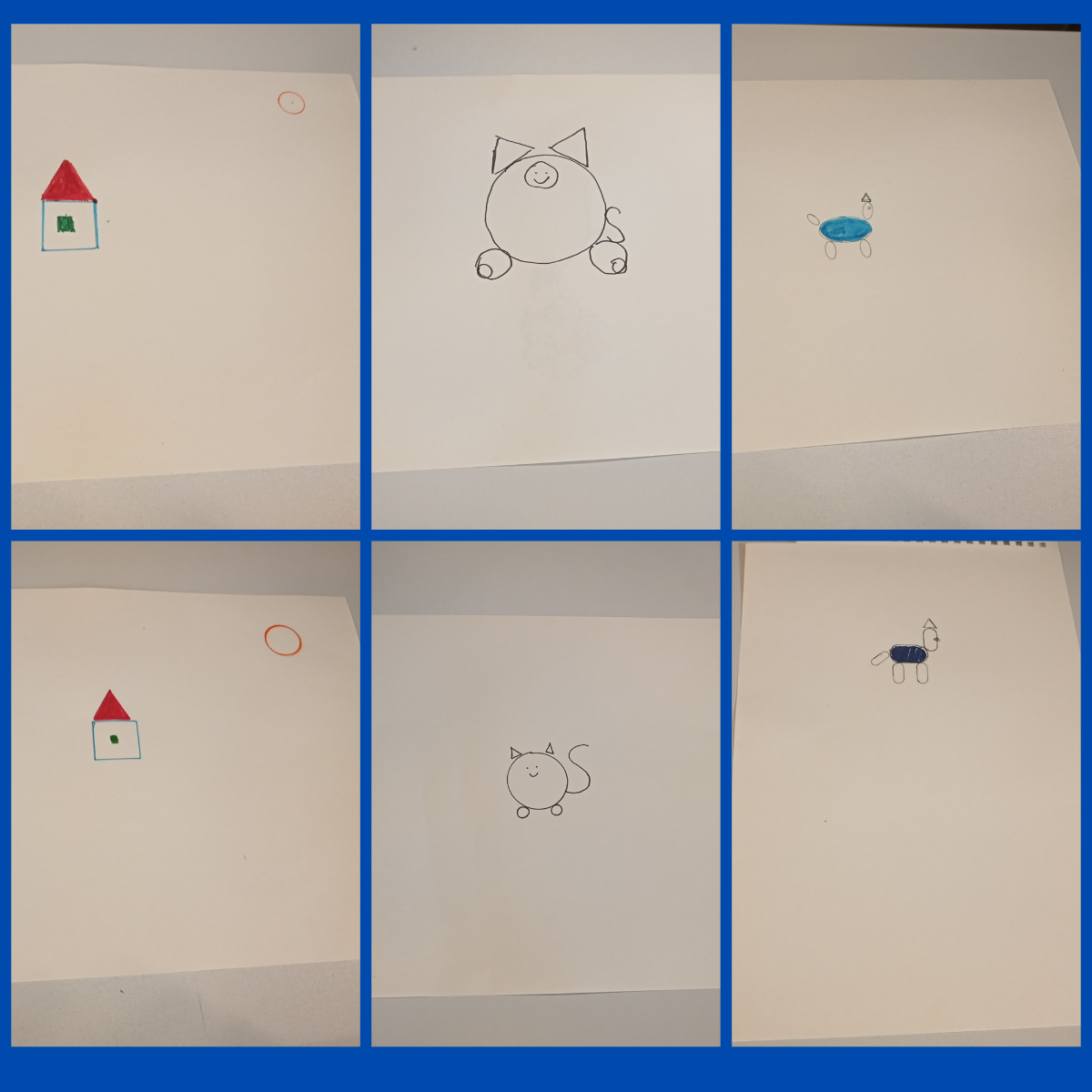
For the second time, PUNCH4NFDI was present with a booth at the DPG spring meeting of the Section Matter and Cosmos (Sektion Materie und Kosmos, SMuk), which took place on 16 – 20 March 2026 at FAU in Erlangen. For this, we created the “reproducibility challenge”, asking researchers to work in teams while one person draws a picture which is then described to a second person, who did not see the picture beforehand nor had the second person necessarily the same tools – such as pens or patterns – available, who tries to reproduce the picture based on the description. This simple task showed, how difficult it is to reproduce “data” with high accuracy. Of course, everyone attending our booth could learn how PUNCH4NFDI is addressing this challenge and which standards, tools, and services the consortium provides in order to support researchers on the way to reproducible research outcomes.
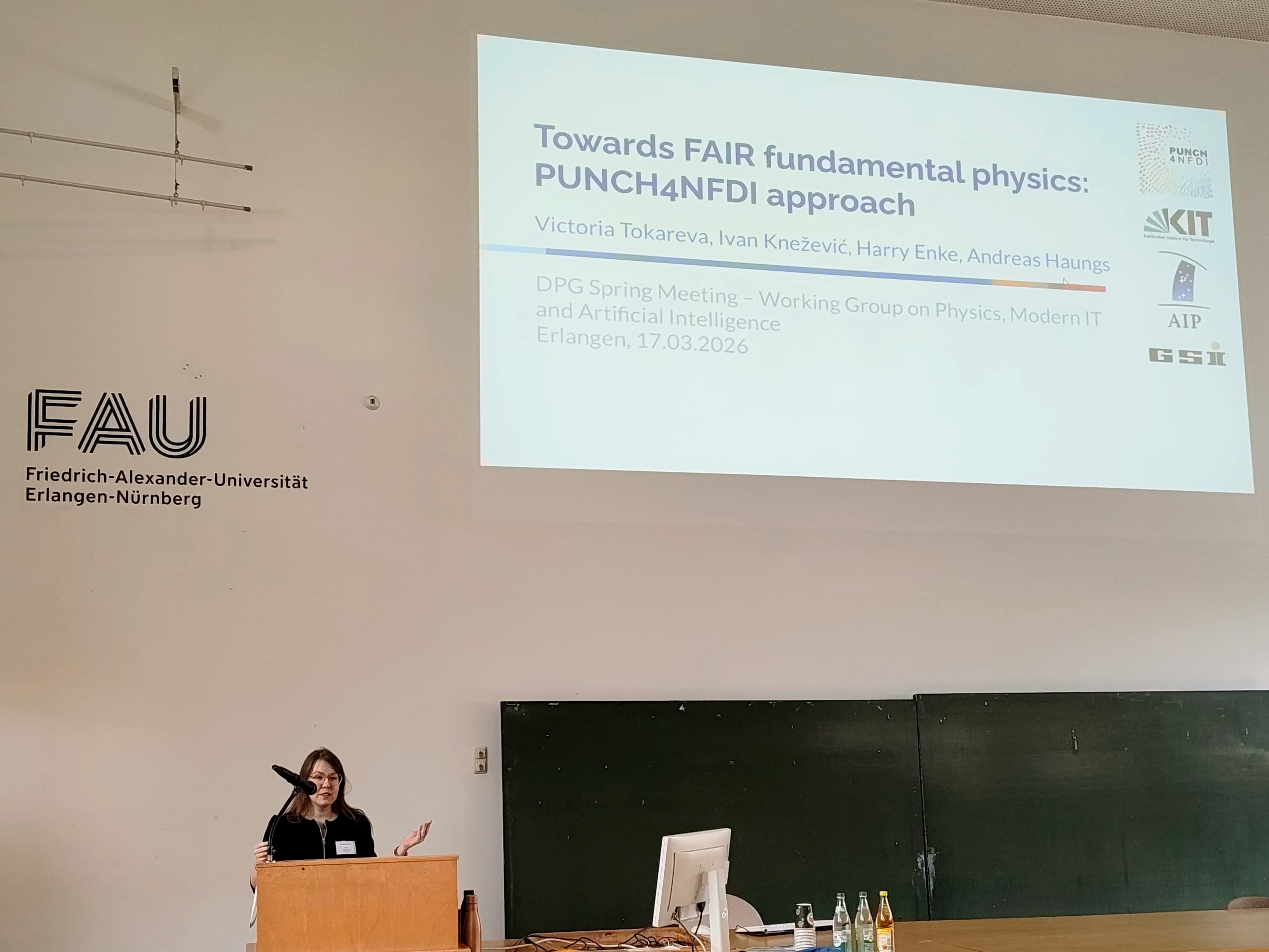
In addition, several presentations were given by PUNCH4NFDI members. Among these, Viktoria Tokavera was given the honor of an Invited Talk to present the consortium efforts on FAIR data management for PUNCH Science Data Platform [1] for AKPIK: Arbeitskreis Physik, moderne Informationstechnologie und Künstliche Intelligenz. The session was thematically concentrated on the overlap of research data management, AI and machine learning. Questions after the presentation focused for example on metadata management at NFDI level, general purpose metadata standards used in research data management communities and available crosswalks.
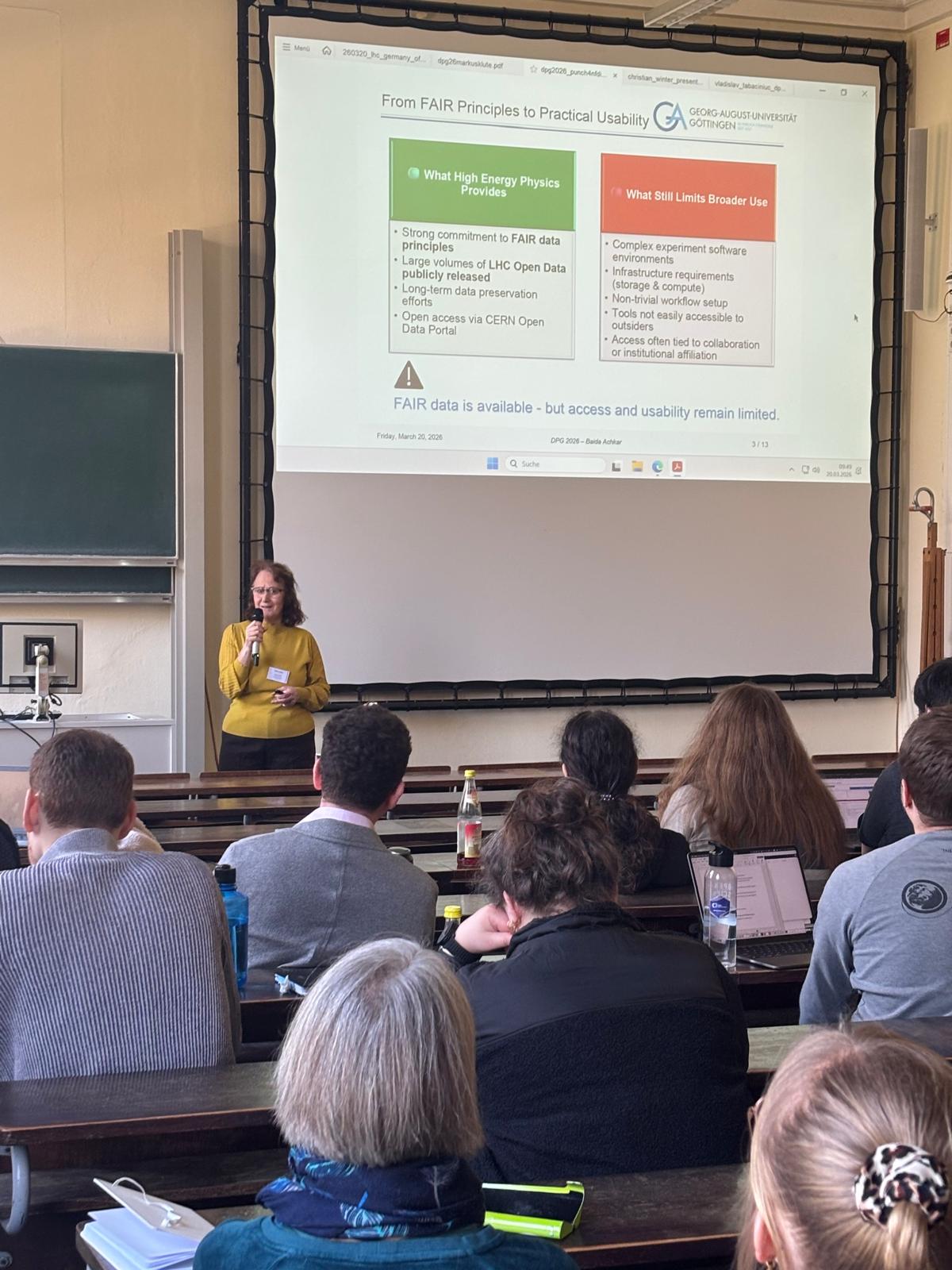
Baida Achkar presented the EXPLORE platform [2], an open-access service that enables users to perform analyses on LHC Open Data without requiring local installations or collaboration membership. The platform addresses a key challenge in FAIR data: while data is openly available, its practical usability often remains limited due to complex software and infrastructure requirements.
The presentation [3] sparked strong interest and discussion. Questions focused on the target user groups – particularly students, teachers, and researchers without collaboration access – and on technical design choices, such as the use of a scalable batch system instead of Jupyter-based environments to ensure reproducibility and support large-scale analyses.
[1] https://www.dpg-verhandlungen.de/year/2026/conference/erlangen/part/akpik/session/3/contribution/3